


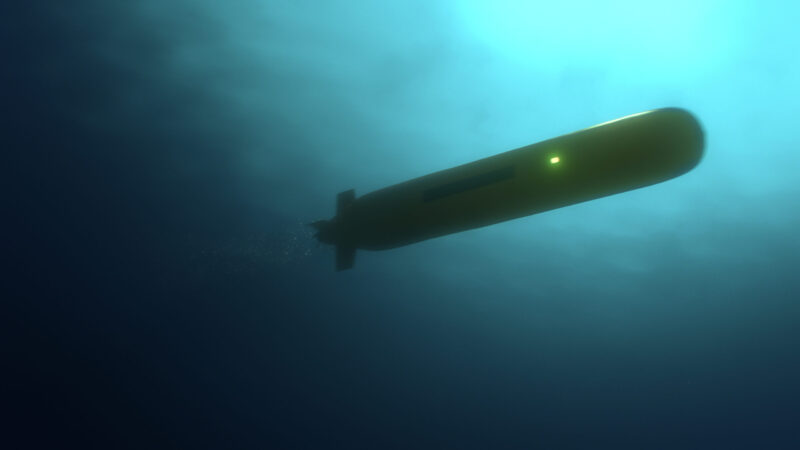
The exploration of our oceans has always been a fascinating and important endeavor for scientists, researchers, and marine enthusiasts. The vastness and complexity of the oceanic environment present numerous challenges. These challenges have historically hindered the understanding of this vital ecosystem. However, with the advent of autonomous underwater vehicles (AUVs), a new era of ocean exploration has been sparked. AUVs are unmanned submersibles equipped with advanced technology to navigate, collect data, and conduct deep-sea surveys. As a result, they provide unprecedented access to underwater environments.
The Importance of Ocean Exploration and the Role of AUVs
Ocean exploration is crucial for understanding and preserving our planet. The oceans cover over 70% of the Earth’s surface. They play a significant role in regulating climate, supporting biodiversity, and providing resources for various industries. However, the majority of the oceans remain unexplored, with only a fraction of their depths and ecosystems studied. AUVs have emerged as an invaluable tool in this quest for knowledge. They enable researchers to access remote and hazardous locations, collect high-resolution data, and monitor the health of marine ecosystems. Harnessing the power of AUVs, scientists can gather vital information. This helps make informed decisions regarding conservation efforts, resource management, and climate change mitigation.
Advancements in AUV Technology
Over the years, advancements in AUV technology have significantly enhanced their capabilities and versatility. Engineers equip AUVs with advanced sensors, imaging, and communication systems. Consequently, these tools enable highly precise data collection. These vehicles operate autonomously in complex underwater environments. They can follow predetermined or adaptive routes for efficient data gathering and analysis. Also, they remain submerged for extended periods, supporting long-term marine monitoring and environmental studies.
Applications of AUVs in Marine Surveying
One of the primary applications of AUVs in ocean exploration is marine surveying. AUVs are equipped with sophisticated sonar systems that can map the seafloor with unprecedented detail. This technology, known as bathymetric surveying, enables scientists to create accurate and high-resolution maps of the ocean floor. These maps are essential for a variety of purposes, including navigation, resource exploration, and hazard identification. AUVs also collect data on water temperature, salinity, and other physical parameters. As a result, they offer insights into ocean circulation and marine ecosystem health. In addition, they support biological surveys by capturing images and videos of underwater flora and fauna. These efforts help with species identification and biodiversity assessment.
Benefits of Using AUVs for Bathymetric Surveying
The use of AUVs for bathymetric surveying offers numerous benefits over traditional methods. Unlike crewed vehicles or ships, AUVs can navigate through narrow and hazardous environments, such as underwater caves or deep trenches, with ease. This allows for the exploration of previously inaccessible areas. In turn, this provides scientists with a more comprehensive understanding of the oceanic landscape. AUVs also offer cost-effective solutions for marine surveying, as they eliminate the need for large crews and expensive equipment. Additionally, AUVs can operate for extended periods without human intervention, collecting data continuously. This ensures a more consistent and accurate dataset. Furthermore, it reduces the chances of errors or gaps in the survey results. The use of AUVs for bathymetric surveying has revolutionized professional ability to explore and map the ocean floor. As a result, this opens up new possibilities for scientific research and resource exploration.
Challenges in AUV Operations and Data Collection
While AUVs have proven to be invaluable tools for ocean exploration, they are not without their challenges. Operating in the harsh and unpredictable oceanic environment presents numerous technical and logistical difficulties. AUVs must be able to withstand extreme pressures, temperature variations, and corrosive saltwater conditions. Besides, ensuring reliable and efficient communication between the AUV and the surface control station is crucial for successful operations. Data collection can also be challenging, as AUVs rely on various sensors and instruments to gather information. Calibrating and synchronizing these devices to provide accurate and synchronized data poses a significant technical challenge. However, ongoing research and development efforts are continuously improving AUV capabilities. In particular, they are addressing these challenges and paving the way for even more advanced ocean exploration.
Future Developments in AUVs for Ocean Exploration
The future of AUVs in ocean exploration holds tremendous promise. Ongoing research and development efforts are focused on enhancing AUV capabilities, improving their endurance, and expanding their range of applications. Sensor and imaging miniaturization will enable AUVs to collect more precise and detailed data, improving understanding of marine ecosystems. In addition, integrating artificial intelligence and machine learning will allow real-time data analysis. This will support faster decision-making. Furthermore, advances in communication technologies will enable networked AUV operations with other vehicles and surface platforms. This will support broader coverage and more complex missions. The future of AUVs in ocean exploration is undoubtedly bright, with limitless possibilities for scientific discovery and conservation efforts.
The Role of Marine Surveyors in AUV Operations
While AUVs offer autonomous capabilities, the role of marine surveyors remains essential in their operations. Marine surveyors lead mission planning and ensure AUVs are deployed effectively and efficiently. They are responsible for defining survey objectives, selecting appropriate sensors and instruments, and determining the optimal survey route. Marine surveyors also play a vital role in data interpretation and analysis, transforming raw data into meaningful insights. Their expertise and knowledge are invaluable in ensuring the accuracy and reliability of the collected data. As AUV technology continues to evolve, marine surveyors will continue to be at the forefront. They will guide and advance the field of ocean exploration.
The Promising Future of AUVs in Ocean Exploration
The advancements in autonomous underwater vehicles have transformed the field of ocean exploration. AUVs provide unmatched access to the deep ocean, enabling precise seafloor mapping and marine biodiversity research. Despite harsh operating conditions, ongoing innovations continue to enhance their capabilities. With strong potential for scientific discovery and conservation, AUVs will remain central to advancing our understanding of the oceans and their role in sustaining the planet.
Read More:


