


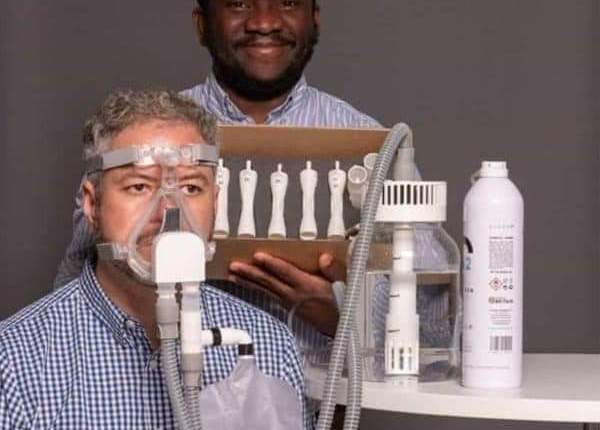
As the global Covid-19 pandemic continues into its second year, countries around the world have had to think of innovative ways to lessen the burden on their hospitals, amid a dire shortage of critical medical equipment that could make the difference between life and death. Notably, non-electric ventilators have proven crucial in resource-constrained healthcare facilities.
Engineering a Breakthrough: The Birth of ShiVent
PhD Engineering student Yusuf Bilesanmi from Nigeria and his team of fellow engineers and researchers from the University of Loughborough have done just that by developing a game-changing apparatus called the ShiVent ventilator, which stands out as a non-electric ventilator for use in resource-poor settings.
Professional Background and Industry Expertise
Bilesanmi calls himself an energy and infrastructure business developer and consultant. He brings 10 years of experience in clean tech, smart grids, and digital factories, driving decarbonisation, decentralisation, and digitisation across the energy value chain. Also, he improves operational efficiency and profitability for businesses and society, aligning with the team’s non-electric ventilator initiative.
He has worked with Panasonic and Mitsubishi, where he developed skills later applied to designing a non-electric ventilator for global health challenges.
Identifying Opportunity in Crisis
“I combine skills of managing large projects and trading electronic items to identify and develop missed opportunities across the value chain,” he writes on his official LinkedIn profile. Incidentally, the realization of a ventilator not dependent on electricity—essentially a non-electric ventilator—was one such opportunity seized.
Award-Winning Innovation and Global Recognition
A Moment of Triumph
Finding Meaning in Everyday Experiences
He recalls a day when his mother, while sorting fish bones, reminded him that most people do not realize how laborious fish cleaning can be. In a similar way, developing simple but effective technologies like a non-electric ventilator often goes underappreciated.
“From that day onwards I cherished every single morsel of food,” he said, drawing a parallel with the care put into designing accessible solutions including the team’s non-electric ventilator.
Expanding Access Across Continents
A Lagos State University graduate, Bilesanmi would like to get the ventilator to those who need it the most across Africa, Asia and South America, according to the Royal Academy of Engineering. Many of these regions are in dire need of non-electric ventilator options that do not rely on consistent power supplies.
“ShiVent does not require electricity, it is easy to install, non-invasive and oxygen-efficient, and our belief is that it can help save lives when more expensive or oxygen-intensive technologies can’t get to patients,” said Bilesanmi. As he explains, it is this unique quality—a ventilator non-electric by design—that sets the ShiVent apart.
How the Technology Works
According to the developer, the system works by connecting hospital patients to an existing oxygen source and blends air with the high-flow oxygen supply. This non-electric ventilator functionality is essential for remote clinics.
The patient inhales oxygen to fill up the lungs and then exhales into a water column, creating back-end pressure that keeps their airway open. The use of a non-electric ventilator in this way makes respiratory support more accessible where power may be unreliable.
The other co-founders are Gaurav Nanajkar, Pawel Nycz and Ricardo Nascimento – all from Loughborough University. Together, they’ve championed the development of this much-needed non-electric ventilator.
Clinical Testing and Validation
The team carried out a demonstration of the ShiVent at Lagos University Teaching Hospital (LUTH) in May to test the safety and efficacy of the product. They aimed to show that a non-electric ventilator could succeed even in austere environments.
‘“We are grateful to our team and the amazing doctors and medical team at Lagos University Teaching Hospital.” Their support was vital in bringing the non-electric ventilator to the attention of more practitioners.
From Trials to Mass Production
The ShiVent has passed three functionality tests and they have just begun clinical trials, which will swiftly be followed up by mass production and distribution to markets of interest,“ Bilesanmi said. Soon, the availability of a non-electric ventilator could transform critical care throughout the developing world.
Shifa Technologies Limited, founded by Bilesanmi during the COVID-19 pandemic to address ventilator shortages, has grown into a leading supplier of innovative non-electric ventilator devices.
Mission-Driven Innovation for Global Health
According to its website, the team collaborated to research, design, test, produce, and supply low-cost, low-tech ventilators to meet rising healthcare demand. That is why they put emphasis on delivering non-electric ventilator options for areas with unreliable electricity.
Read More:


